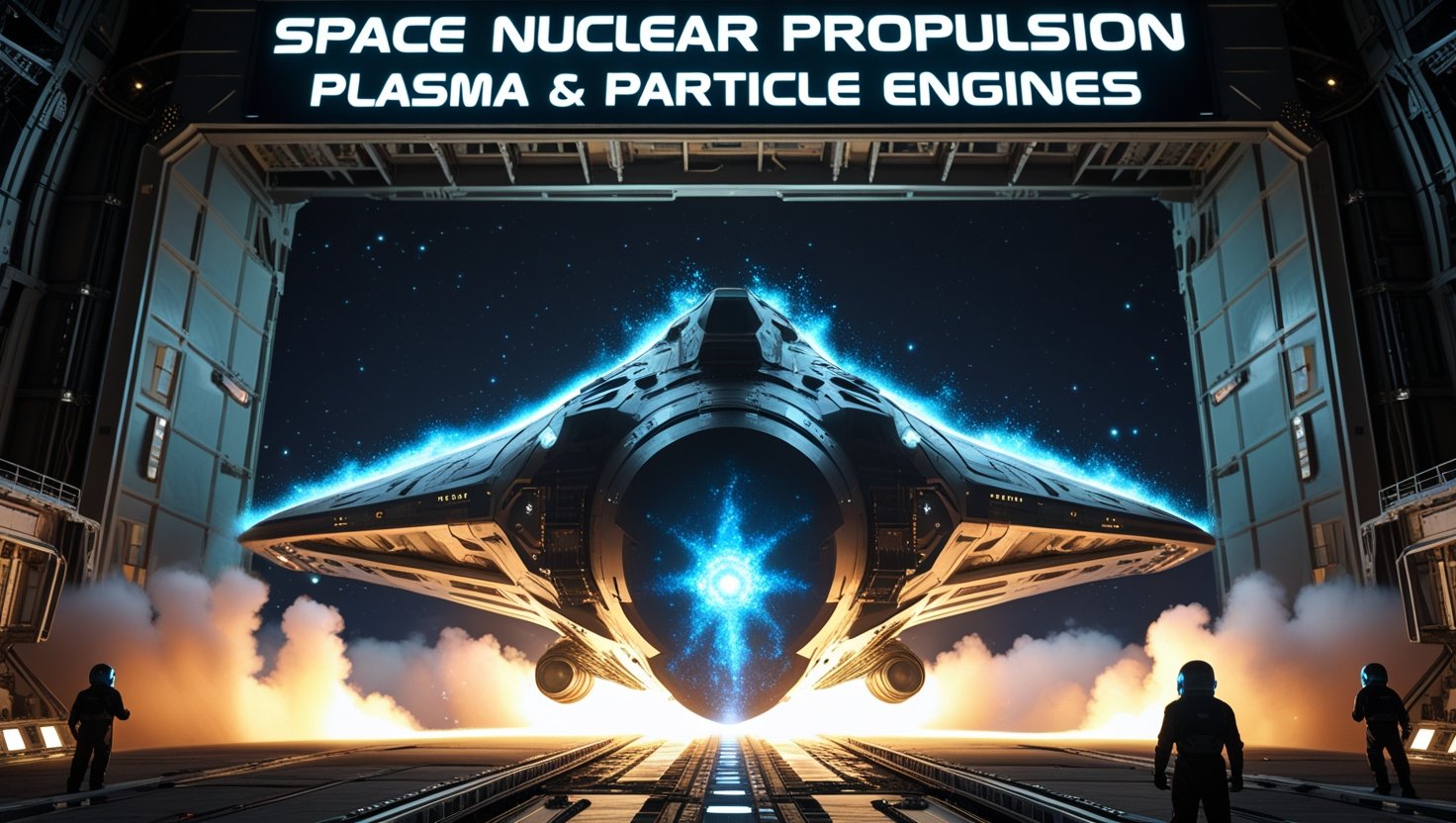
Space nuclear propulsion stands at the cusp of a new frontier in aerospace technology. Imagine harnessing the raw, almost untamed energy of atomic reactions to propel spacecraft far beyond the reach of traditional chemical rockets. In this realm, plasma engines and particle engines merge with nuclear science, creating propulsion systems that offer not only higher thrust but also unprecedented fuel efficiency. The integration of these advanced technologies is fueling a paradigm shift in interplanetary exploration, a shift where risk meets reward, and science fiction edges closer to scientific reality. Step into this cosmic journey as we explore the scientific principles, engineering marvels, and the collaborative spirit that drives the development of space nuclear propulsion.
The Vision of Space Nuclear Propulsion:
Humanity’s ambition to explore the cosmos has long driven innovation in aerospace technology. The concept of deriving propulsion from nuclear reactions isn’t new, yet recent breakthroughs promise to achieve feats once deemed impossible. Space nuclear propulsion systems leverage nuclear fission to generate extreme heat or electricity, transforming energy into thrust with a precision that chemical rockets can’t match.
This vision, rooted in decades of research, offers the potential for faster, more fuel-efficient travel, making long-duration missions to Mars, the outer solar system, and beyond more feasible than ever before. As research agencies and private enterprises invest in this technology, nuclear propulsion is steadily moving from theoretical sketches to fully realized engineering projects that could redefine our journey through the stars.
The Science of Nuclear Propulsion:
At its core, nuclear propulsion involves harnessing the energy released by splitting atomic nuclei. Unlike combustion-based systems that rely on chemical reactions, nuclear methods offer a tremendous energy density, providing power that is orders of magnitude greater. There are two primary avenues: nuclear thermal propulsion (NTP) and nuclear electric propulsion (NEP).
In NTP, a reactor heats a propellant, which then expands and is expelled to generate thrust. In NEP, the reactor’s heat is converted into electricity, which is subsequently used to accelerate charged particles. Both methods exploit the immense energy output of nuclear fission, and while each bears distinct performance characteristics, their combined development marks a transformative leap in propulsion technology. The capacity to achieve high thrust and greater fuel efficiency simultaneously is the driving force behind this innovation.
The Marvel of Plasma Engines:
Plasma engines capture the dynamic interplay between ionized gases and electromagnetic fields to produce thrust. In these engines, a propellant is heated into a plasma state and then accelerated by magnetic fields. Unlike traditional propulsion systems that depend on mechanical pump systems or chemical combustion, plasma engines operate with fewer moving parts and can achieve high specific impulses.
This technology not only extends mission lifespans but also allows for finer control during complex maneuvers. Their ability to operate with various propellants, from noble gases like xenon to alternative options, makes them particularly attractive for long-distance and interplanetary missions where efficiency and versatility are paramount. The efficiency and adaptability inherent in plasma propulsion reflect the ingenuity of engineers looking to push the boundaries of what is possible in space travel.
Precision in Propulsion Dynamics:
While plasma engines take center stage in many modern spacecraft designs, particle engines offer another complementary pathway to high-efficiency propulsion. These systems focus on accelerating charged particles, often ions, using electrical potentials created inside the engine chamber. By fine-tuning these potentials, engineers can achieve precise control over the exhaust velocity, allowing for a customizable thrust profile suited to specific mission demands.
As a result, particle engines are prized for their ability to offer both sustained low-thrust acceleration during long-duration missions and rapid adjustments for orbital maneuvers. The relatively low mass erosion compared to traditional grid-based thrusters ensures that these systems can operate reliably over long periods, making them integral to missions that push deep into space. With both plasma and particle engines leading the next generation of propulsion, spacecraft can achieve an optimal blend of power and efficiency.
Crafting Next-Gen Propulsion Systems:
Building and refining space nuclear propulsion systems is an engineering challenge that pushes the limits of current technology. Every component, from the reactor core to the magnetic acceleration coils in plasma engines, must be designed to withstand extreme conditions, including high temperatures, intense radiation, and the vacuum of space.
Innovations such as advanced composite materials, sophisticated thermal management systems, and modular reactor designs are at the forefront of these efforts. By reducing the overall mass while simultaneously increasing durability, engineers are inching closer to spacecraft systems that not only survive but thrive in space exploration missions. The advancements in manufacturing methods, from additive techniques to precision machining, play a crucial role in this evolution, shining a light on our limitless capability to adapt and innovate.
Shielding Against Cosmic Radiation:
As spacecraft venture deeper into space, one of their greatest challenges is the relentless barrage of cosmic radiation, especially in proximity to strong planetary magnetospheres. For space nuclear propulsion systems, effective radiation shielding is not just an optional safety measure, it’s a necessity. Engineers integrate multiple layers of shielding into reactor and engine designs, employing materials like titanium, tungsten, and advanced composites to deflect or absorb harmful radiation.
These measures protect both the sensitive onboard electronics and the invaluable scientific instruments critical to mission success. The development of these shields is a delicate balance between adding weight and ensuring maximum safety, driving a continuous search for materials that offer superior protection without compromising performance. In the contest between raw cosmic power and engineered resilience, the guardians of energy stand as a testament to human ingenuity facing nature’s extremes.
Global Collaborations and Technological Triumphs:
The journey toward operational space nuclear propulsion is a collaborative one that spans borders and unites nations. Global partnerships between space agencies, research institutions, and private companies have accelerated innovations by combining diverse expertise and resources. Such collaborations facilitate the pooling of data from test programs, the standardization of safety protocols, and the cross-pollination of ideas that drive breakthrough technologies in plasma and particle engine designs.
These international efforts not only reduce redundancy and lower costs but also exemplify a shared vision: advancing humanity’s grasp on cosmic travel. The collaborative spirit woven into these projects reinforces the notion that pushing the boundaries of science and technology is a collective endeavor, one that benefits from the insights and contributions of many.
The Future of Interplanetary Journeys:
The promise of space nuclear propulsion extends far beyond short-term exploratory missions, it envisions a future where the solar system becomes a vast highway for humanity. By drastically reducing transit times and increasing the payload capacity, these advanced propulsion systems could enable crewed missions to Mars, expeditions to the outer planets, and even interstellar probes to banner new worlds.
As engineering challenges continue to be addressed, the integration of nuclear propulsion with plasma and particle engine technologies paves the way for groundbreaking missions that were once only the subject of science fiction. These advancements will not only propel spacecraft at unprecedented speeds but also open new windows of opportunity for scientific research, resource utilization, and deeper understanding of our place in the cosmos.
Conclusion:
Space nuclear propulsion powered by advanced plasma and particle engines holds transformative promise for the future of space exploration. This union of atomic power and innovative engine design is set to revolutionize our approach to interplanetary travel, enabling faster, more efficient missions that could expand humanity’s reach into the cosmos. As research progresses and collaboration intensifies on a global scale, the dream of routine deep-space voyages inches ever closer to reality.
FAQs:
1. What is space nuclear propulsion?
It uses nuclear reactions to produce immense energy for spacecraft propulsion.
2. How do plasma engines work?
They heat a propellant into a plasma state and use magnetic fields to generate thrust.
3. What distinguishes particle engines from plasma engines?
Particle engines accelerate charged particles with electrical potentials for precision thrust control.
4. Why is radiation shielding important in these systems?
Because it protects critical components from harmful cosmic and reactor-generated radiation.
5. Are these propulsion methods used in current missions?
They are under active development and testing for future deep-space missions.
6. What advantages do these engines offer over chemical rockets?
They provide higher fuel efficiency and reduced transit times for long-duration missions.