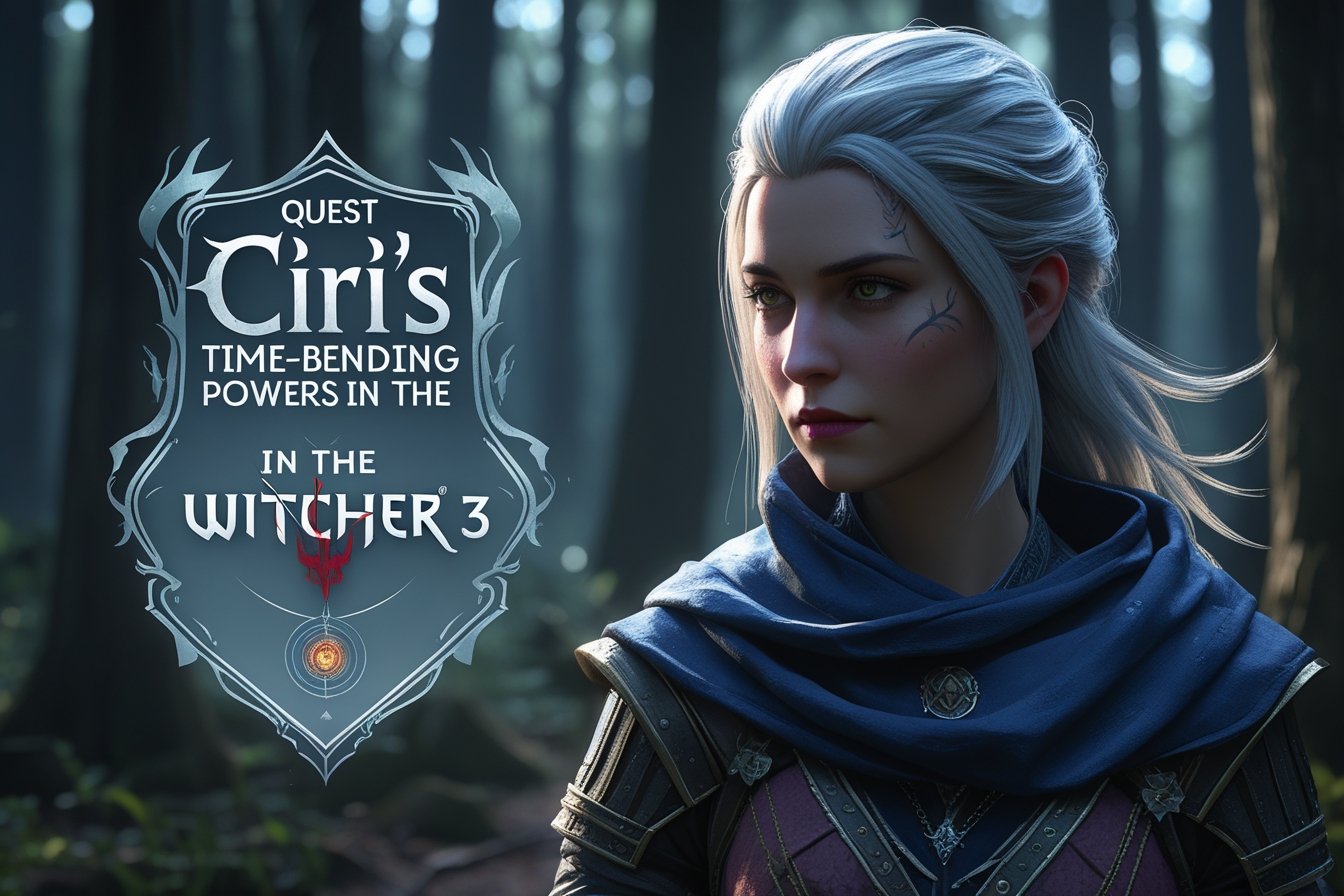
Ever wondered what it feels like to literally bend reality itself? Step into Ciri’s boots in The Witcher 3 and experience the most mind-bending supernatural abilities in gaming, where time manipulation meets ancient Elder Blood magic in ways that fundamentally change how combat and exploration work.
The Elder Blood Legacy:
Ciri’s time-bending powers in The Witcher 3 stem from her unique Elder Blood heritage, but the game presents these abilities in ways that go far beyond simple teleportation. Understanding the depth of her temporal manipulation capabilities reveals why she’s considered one of the most powerful beings in the Witcher universe.
The Elder Blood flowing through Ciri’s veins isn’t just magical energy – it’s a direct connection to the fabric of space-time itself. This connection manifests in The Witcher 3 through three distinct time-bending mechanics that each serve different strategic purposes during gameplay.
Her Blink ability represents the most obvious time manipulation power, allowing Ciri to essentially step outside normal temporal flow. During these moments, she exists in an accelerated time stream where she can position herself behind multiple enemies before they can react. This isn’t simple teleportation – it’s genuine time-bending that gives her tactical advantages impossible for other characters.
The Charge ability demonstrates another aspect of Ciri’s temporal control. By manipulating time around herself, she can build momentum that transcends normal physics. The devastating impact of her charged attacks suggests she’s accelerating her own temporal reference frame while keeping targets locked in slower time streams.
Dissecting the Blink Phenomenon:
Ciri’s Blink ability in The Witcher 3 represents one of gaming’s most sophisticated time manipulation mechanics. Unlike typical teleportation powers found in other games, Blink actually demonstrates complex temporal mechanics that reward strategic thinking.
When Ciri activates Blink, she doesn’t simply disappear and reappear – she enters an accelerated time state where normal physics rules become malleable. During this phase, enemies appear nearly motionless while she moves at superhuman speeds. This time dilation effect explains why she can strike multiple targets before they react.
The charging mechanism for Blink suggests Ciri must build temporal energy before unleashing her time-bending assault. Longer charges allow her to maintain the accelerated time state for extended periods, enabling attacks on up to five enemies. This energy limitation demonstrates that even Elder Blood has constraints when manipulating fundamental forces.
Strategic Blink usage requires understanding enemy positioning and timing. Since Ciri automatically targets enemies within range, players must position her carefully before activation. The ability works best against grouped enemies, where her time-bending advantage can eliminate multiple threats simultaneously.
Master players learn to combine Blink with regular attacks and dodging to create fluid combat sequences. The time manipulation aspect means Ciri can often escape dangerous situations by blinking away from overwhelming enemy groups, then repositioning for counterattacks.
Charge Attack Temporal Mechanics:
Ciri’s Charge ability showcases another dimension of her time-bending powers through momentum manipulation that defies conventional physics. This temporal technique allows her to build kinetic energy by accelerating her personal time stream while moving through space.
The charging process involves Ciri entering a focused state where she synchronizes her movement with temporal flow patterns. As she builds speed, her Elder Blood amplifies the momentum beyond what normal acceleration could achieve. The devastating impact of fully charged attacks suggests she’s condensing temporal energy into kinetic force.
Charge attacks work particularly well against heavily armored enemies or large monsters that resist regular sword strikes. The time-enhanced momentum allows Ciri to punch through defenses that would normally deflect her blade. This makes Charge essential for certain boss encounters throughout The Witcher 3.
Mastering Charge timing requires understanding enemy attack patterns and movement speeds. Since Ciri commits to the attack direction once charging begins, players must anticipate where targets will be when the time-enhanced strike lands. This predictive element adds tactical depth to her temporal combat style.
Advanced Charge techniques involve using environmental features to extend charging distance or redirect momentum mid-attack. Skilled players can chain Charge attacks with Blink sequences to create devastating combination attacks that showcase Ciri’s full time-bending potential.
Elemental Time Fusion:
Ciri’s Magic Stone ability represents a unique fusion of elemental magic with temporal manipulation that creates effects unavailable to other Witcher 3 characters. This power demonstrates how Elder Blood can bend both time and elemental forces simultaneously.
The Magic Stone projectiles travel with enhanced velocity that suggests time acceleration during their flight paths. These time-enhanced fireballs impact with greater force than normal magical attacks, often staggering enemies that resist standard spells. The temporal component explains their superior penetration power.
Charging Magic Stone attacks increases both their elemental potency and temporal distortion effects. Fully charged stones create explosive impacts that seem to briefly slow enemies caught in the blast radius. This time-bending crowd control makes the Magic Stone valuable for managing multiple attackers.
The ability works exceptionally well against fast-moving enemies that dodge conventional attacks. The time-enhanced tracking and velocity of Magic Stone projectiles make them nearly impossible to avoid once launched. This makes the ability crucial for certain enemy types throughout Ciri’s story segments.
Strategic Magic Stone usage involves timing releases to catch enemies during vulnerable moments in their attack cycles. The temporal enhancement means these projectiles can interrupt enemy abilities that normal attacks cannot stop, giving Ciri unique crowd control options.
Integrating Time Powers:
Ciri’s time-bending abilities work best when integrated into fluid combat sequences that leverage each power’s temporal advantages. Understanding how her abilities complement each other transforms chaotic battles into choreographed displays of time manipulation mastery.
Opening combat with Blink allows Ciri to instantly establish positional advantage while eliminating weaker enemies. The time dilation effect often confuses remaining opponents, creating opportunities for Charge attacks against stunned targets. This temporal confusion becomes a significant tactical asset.
Magic Stone serves as an excellent setup tool for other time-bending abilities. Launching stones to stagger enemy groups creates perfect conditions for Blink chains or Charge finishers. The temporal enhancement of projectiles ensures they land even against evasive targets.
Defensive applications of Ciri’s powers showcase their versatility beyond pure offense. Blink provides instant escape routes from overwhelming situations, while Charge can break through enemy formations to reach safer positions. Magic Stone offers ranged pressure that keeps enemies at manageable distances.
Advanced combat techniques involve cycling through abilities to maintain constant temporal pressure on enemies. By never allowing opponents to establish normal time flow patterns, Ciri can control entire battlefields through strategic time manipulation. This approach transforms her from a mere combatant to a battlefield controller.
Powers with Narrative Purpose:
The Witcher 3 brilliantly integrates Ciri’s time-bending powers into narrative moments that showcase their significance beyond gameplay mechanics. These temporal abilities drive key story beats while demonstrating the true scope of Elder Blood’s potential.
Ciri’s escape sequences throughout the game utilize her time manipulation for dramatic effect. Blink allows her to navigate impossible situations, while her other powers create spectacular action sequences that feel cinematically appropriate. These moments blend gameplay with storytelling seamlessly.
The limited nature of Ciri’s playable segments emphasizes the overwhelming power of her abilities. Players get tantalizing glimpses of time-bending potential without becoming overpowered. This design choice maintains narrative tension while showcasing abilities that would trivialize normal Witcher challenges.
Ciri’s powers also serve thematic purposes by contrasting with Geralt’s more grounded Witcher abilities. Her time manipulation represents chaotic potential that could reshape the world, while Geralt’s signs demonstrate controlled, learned magic. This contrast reinforces their different roles in the overarching narrative.
The game uses Ciri’s abilities to foreshadow her ultimate destiny as someone capable of traveling between worlds. Her time-bending demonstrations hint at powers that extend far beyond what players experience during combat sequences.
Programming Time Manipulation:
From a technical perspective, Ciri’s time-bending abilities represent impressive programming achievements that create convincing temporal manipulation effects within The Witcher 3’s engine. Understanding these technical elements enhances appreciation for the powers’ implementation.
Blink’s time dilation effects require sophisticated camera work and animation timing that creates the illusion of temporal acceleration. The seamless transitions between normal time and Ciri’s accelerated state demonstrate advanced programming techniques that few games attempt.
Charge attacks utilize physics modifications that temporarily alter Ciri’s collision properties and momentum calculations. These changes create impacts that feel supernaturally powerful while maintaining believable cause-and-effect relationships within the game world.
Magic Stone projectiles employ enhanced tracking algorithms and visual effects that suggest temporal enhancement without breaking the game’s established rules. The balance between power and fairness required careful calibration to avoid making Ciri overpowered during her playable segments.
The integration of time-bending effects with The Witcher 3’s existing systems showcases technical artistry that serves both gameplay and narrative purposes. These powers feel naturally integrated rather than artificially imposed on the established game mechanics.
Maximizing Temporal Advantage:
Mastering Ciri’s time-bending powers requires understanding how to maximize their temporal advantages across different combat scenarios. Each ability serves specific strategic roles that become crucial during challenging encounters.
Blink excels in crowd control situations where multiple weak enemies threaten to overwhelm through numbers. The time manipulation allows Ciri to eliminate several threats before they can coordinate attacks. This makes Blink essential for survival during her most challenging story segments.
Charge works best against single, powerful enemies where raw damage output determines victory. The time-enhanced momentum can break through defenses that resist other attacks, making it crucial for boss encounters. Timing Charge attacks requires understanding enemy vulnerability windows.
Magic Stone provides excellent area denial and crowd control through its temporal enhancement effects. The ability to stagger multiple enemies simultaneously creates opportunities for other powers while maintaining safe distances from dangerous opponents.
Combining abilities creates synergistic effects that multiply Ciri’s combat effectiveness. Magic Stone set up into Blink chains, followed by Charge finishers, represents optimal time-bending combat flow that showcases her full potential.
Conclusion:
Ciri’s time-bending powers in The Witcher 3 represent more than flashy combat abilities, they’re sophisticated temporal manipulation tools that showcase the true potential of Elder Blood magic. From Blink’s time dilation effects to Charge’s momentum enhancement and Magic Stone’s elemental fusion, each ability demonstrates unique aspects of time manipulation. Ciri’s temporal abilities ultimately serve the larger narrative by demonstrating why she’s considered one of the most powerful beings in the Witcher universe, while giving players direct experience of powers that transcend normal magical limitations.
FAQs:
1. How does Ciri’s Blink ability work in The Witcher 3?
Blink allows Ciri to enter time dilation and teleport-attack up to five enemies instantly.
2. What makes Ciri’s powers different from Geralt’s signs?
Ciri’s Elder Blood enables time manipulation while Geralt’s signs use learned Witcher magic techniques.
3. Can you upgrade Ciri’s abilities in The Witcher 3?
No, Ciri’s powers are fixed and cannot be upgraded through skill trees or mutations.
4. Why are Ciri’s playable segments limited in the game?
Her time-bending powers would make normal gameplay trivial, so segments are brief for balance.
5. What is the source of Ciri’s time manipulation abilities?
Her Elder Blood heritage provides a direct connection to space-time manipulation through ancient elven magic.
6. How do you effectively use Ciri’s Charge attack?
Hold the attack button to build temporal momentum, then release for devastating time-enhanced damage.
